
Colorado Springs Concrete Driveway Services
Concrete RV and Parking Pads in Colorado Springs
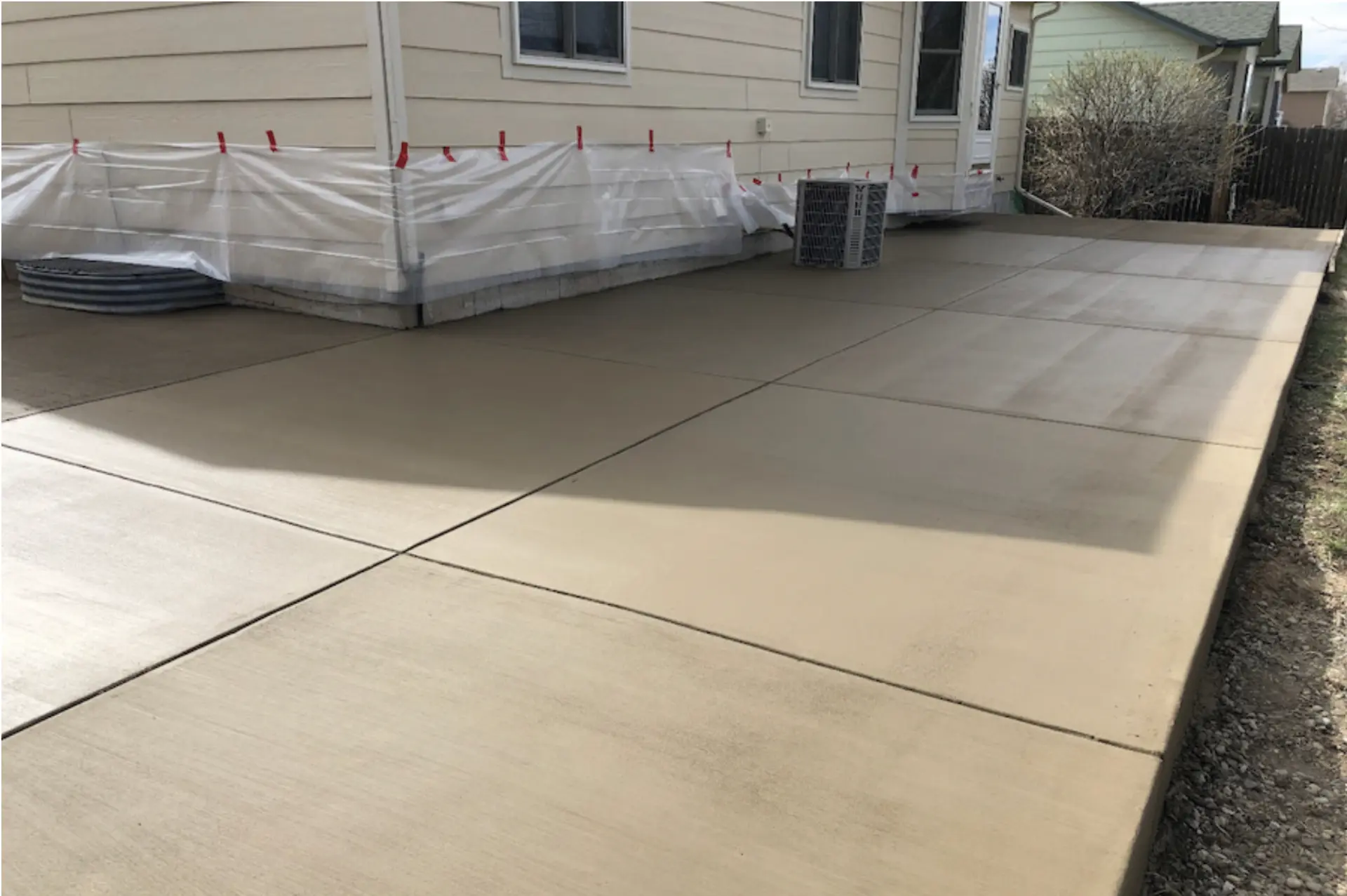
An RV can put more weight on four jack pads than a passenger car puts on an entire driveway, and it often sits in one spot for months at a time. A pad poured at standard driveway thickness will crack and settle under that. We build RV pads as their own structure, based on the loaded weight, axle placement, jack footprint and how you get to it.
When this service is the right call
- Class A, Class C and fifth wheel storage
- Boat and utility trailer parking
- Long term equipment storage at a home
- Side yard pads accessed from the main driveway
Built around what it carries
Thickness and steel are set from the loaded weight of the vehicle, the axle setup and the jack footprint rather than a default residential number. We pay close attention to where the jacks sit, because those loads land on very small areas.
- Pad thickness set from loaded vehicle weight
- Steel sized to the load it carries
- Base dug deeper than a standard driveway
Access and turning
A pad you cannot reach is not useful. We lay out approach width, turning radius and the transition from the main driveway before we ever form it, so you can position the vehicle without driving across the lawn.
Drainage and standing water
Pads are sloped so water leaves instead of sitting under a parked vehicle for a season. Standing water under a parked RV wears down the slab and is a headache for you.
Utilities and future use
Where power, water or a sewer connection is planned at the pad, we run sleeves before the pour instead of cutting them in later. We talk through how you plan to use the pad before we finalize the plan.
Scope Factors
What changes the scope of this project
These are the things that change what your driveway needs and what it costs.
- Loaded vehicle weight
- Dry weight understates what the pad actually carries. Water, fuel and cargo all count toward the load the slab is built for.
- Axle and jack layout
- Where the axles sit and where the leveling jacks land set the concentrated load points across the pad.
- How long it stays parked
- A vehicle parked in one spot for a season loads the same points continuously, which is different from daily driveway traffic.
- Access route
- The approach from the street or driveway may need widening or its own base to reach the pad without crossing landscaping.
Process
How the work is carried out
01
Vehicle review
We confirm loaded weight, axle setup, jack footprint and dimensions.
02
Site layout
We lay out the pad location, approach and turning radius on your property.
03
In person, proposal, contract
We explain everything in person, follow that up with a comprehensive proposal, and finally lock everything in with a transparent contract before the project starts.
04
Dig and base
The deeper base is dug out and compacted in layers.
05
Pour
The pad is formed, reinforced, poured and finished for traction.
06
Curing
Curing is protected and the loading schedule for the vehicle is stated in your contract.
Comparison
RV pad compared with parking on an existing driveway
| Option | Makes sense when | Limitation |
|---|---|---|
| Dedicated RV pad | The vehicle is stored on the property for long periods | Needs its own space, access and a heavier base |
| Extending the main driveway | The vehicle is parked occasionally and access is direct | The existing section may not be built for that kind of load |
| Gravel parking area | A temporary or low cost solution is acceptable | Ruts under the jacks and ongoing regrading |
Option
Dedicated RV pad
Makes sense when
The vehicle is stored on the property for long periods
Limitation
Needs its own space, access and a heavier base
Option
Extending the main driveway
Makes sense when
The vehicle is parked occasionally and access is direct
Limitation
The existing section may not be built for that kind of load
Option
Gravel parking area
Makes sense when
A temporary or low cost solution is acceptable
Limitation
Ruts under the jacks and ongoing regrading
Colorado Conditions
Soil, drainage and freeze thaw on the Front Range
Local conditions decide what this service has to account for.
- Seasonal storage means the pad carries concentrated jack loads through repeated Front Range freeze and thaw cycles.
- Heavy clay under a heavily loaded pad makes settling worse, so we dig the base deeper than a standard driveway.
- Snow sliding off a parked RV piles meltwater on one side of the pad, which we account for in the slope plan.
- Side yard access on Colorado Springs lots often crosses a grade change, which we check before locking in the pad location.
Service Area
Where we provide concrete rv and parking pad installation
- Concrete RV and Parking Pad Installation in Colorado Springs
- Concrete RV and Parking Pad Installation in Monument
- Concrete RV and Parking Pad Installation in Castle Rock
- Concrete RV and Parking Pad Installation in Parker
- Concrete RV and Parking Pad Installation in Larkspur
- Concrete RV and Parking Pad Installation in Castle Pines
- Concrete RV and Parking Pad Installation in South Denver Metro
- Concrete RV and Parking Pad Installation in Cherry Hills Village
- Concrete RV and Parking Pad Installation in Greenwood Village
- Concrete RV and Parking Pad Installation in Lone Tree
- Concrete RV and Parking Pad Installation in Highlands Ranch
Answers
Concrete RV and Parking Pad Installation questions, answered
How thick should an RV pad be?
Thicker than a passenger vehicle driveway. The exact thickness comes from your loaded vehicle weight, axle setup, jack footprint and your soil, and it is written into your contract.
How large should an RV pad be?
Large enough for the vehicle plus slide outs, awnings, door clearance and walking space. Dimensions are set from your actual vehicle, not a generic size.
Do I need to put boards under my jacks?
Even on a properly built pad, spreading jack loads with pads or blocks is good practice. It reduces the point load and protects the finish.
Can an RV pad be added beside an existing driveway?
Yes. The access route and the connection to the existing slab are part of the design, and the joint between them is planned so both can move independently.
Can I run power and water to the pad?
Sleeves for utilities are run before the pour when hookups are planned. Licensed trades handle the actual connections.
How soon can I park the RV on a new pad?
Heavy vehicles typically wait a lot longer than passenger cars, and cold weather stretches that window further. Your contract states the specific schedule.
Ready to talk about your driveway?
Send the details and a few photos. We come out, explain everything in person, and follow up with a comprehensive proposal.
THE DRIVEWAY KING DIFFERENCE
Speak directly with the King about your driveway.